Dr. h.c. Anja Carron
Principal & Strategic Advisor | Territorial & Cross-Border Ecosystem Development | Biocultural Wealth & Bioeconomy
From biocultural wealth to lasting territorial capability.
Dr. h.c. Anja Carron advises governments, funders and communities on developing resilient territorial economies from within a region's living systems, connecting ecosystems, cultural practices, Indigenous and women-held knowledge with research, enterprise, investment and industrial capability.
Her work focuses on a critical transition: how living and cultural wealth becomes economically visible and actionable, who has authority over its use, and how knowledge, ownership and capability can remain connected to the people and places that sustain it.
As an ecosystem developer, she designs the institutional and partnership architecture through which territories can govern that transition, build their own capability and retain a meaningful share of the value created.
The Shift
From the Margins Inward
The economies that will define the coming decades will not be built only outward from metropolitan cores. They will also be built inward from the places we call peripheral: from rural territories, women's knowledge and economic agency, biodiversity and cultural heritage that cannot be separated from place.
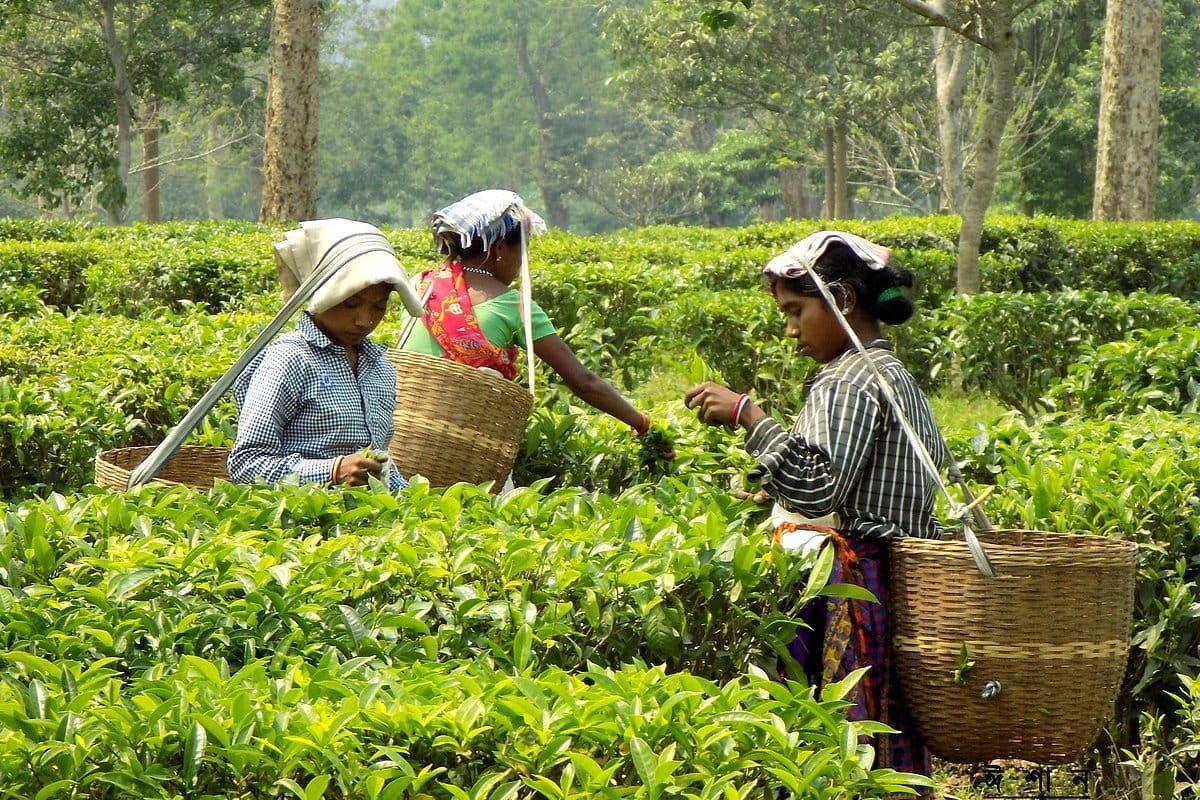
In Assam's handloom economy, Morocco's argan belt, Ghana's shea landscapes, Brazil's babassu forests and Galicia's estuaries, women's knowledge already sustains important regional value chains.
What these territories often lack is not value. It is the institutions to recognise, govern and keep that value at home.
What remains at the economic margin is often what institutions do not know how to see. Knowledge can sustain a territory without entering research, policy or investment decisions.
The deeper test is not only how much value remains, but what the territory becomes capable of doing afterwards.
Technology, finance and regulation are now reaching further into these places. Ecological data, biological materials and traditional knowledge can become visible to global markets before a territory has the rights, governance, processing capacity and local institutions to determine what happens next.
The decisive shift is therefore not simply from fossil to biological resources. It is from treating territories as sources of inputs to recognising them as ecological, economic, institutional and knowledge systems in their own right.
Current Developments
What changing policies, technologies and markets mean for territories
Biological resources, ecological data and traditional knowledge are becoming economically legible to markets and institutions faster than many territories are developing the institutions to govern their use. What becomes legible can become valuable and investable before the source territory is ready to act. These reflections examine what current developments change, and what territories need in order to respond on their own terms.
Nature-related disclosure is becoming territorial
Nature-related assessment and disclosure are becoming increasingly location-specific. The ISSB is developing global nature-related disclosure guidance, drawing substantially on the TNFD framework, with an exposure draft expected in October 2026.
Why it mattersLocation-specific nature information is becoming more relevant to financial assessment, while many territories lack the data architecture and governance to represent themselves on their own terms.
The territorial questionWho produces, governs and benefits from that information at the territorial level.
Benefit-sharing after the Cali Fund
New mechanisms recognise that commercial value can arise from genetic and sequence information without continued physical access to the territory of origin.
Why it mattersA global mechanism for monetary benefit-sharing from commercial use of digital sequence information now exists, while the practical architecture for allocation and territorial participation is still developing.
The territorial questionWhether a territory can act as a counterparty able to hold and direct that value.
Market access is moving back to the landscape
Traceability and legality requirements increasingly begin at the source.
Why it mattersProducer organisation, territorial data and local governance are becoming part of market access itself.
The territorial questionWhether the governance of the producing territory is built before the market requires it.
The Practice
Strategic positioning and the design of ecosystems
The starting point is diagnosis. Dr. Carron reads a territory, a sector or an institution, including the knowledge, ecological conditions and capabilities that existing economic frameworks may overlook. She identifies the gaps that hold it back and positions it for the bioeconomy.
From that reading she designs the ecosystem and partnership architecture that make value flow and stay: the connections between institutions, communities, knowledge, capital and markets, and the governance that holds them on equal terms.
A biodiversity question becomes a rights question. The rights question becomes a governance question. Governance must meet finance, capability, standards and markets. What is usually missing is not another individual project or specialism. It is the architecture that holds the different parts together as one territorial system.
The instruments carry the work; the judgement behind them is the practice.
Strategic positioning
Reading and positioning a territory, sector or institution for the bioeconomy, and setting the strategy that follows from it.Governments · Regions · Institutions
Ecosystem and cluster design
Designing the architecture that links production, knowledge, research, standards, capability and markets into one working system.Governments · Regions · Industry
Partnership architecture
Structuring the private, public, people and planet partnership and the governance that keeps the four interests level as the ecosystem evolves.Funders · Public bodies · Industry · Communities
Territorial and investment readiness
Establishing the rights, baseline, counterparties, governance and measurement through which a territory can engage with finance without losing control of its direction.Development banks · Foundations · Impact investors · Family offices
Capability and knowledge systems
Designing the learning ecosystem that keeps a region's knowledge in use and connects traditional practice with research, technology, design and future enterprise.Governments · Universities · Agencies · Community institutions
Strategic counsel and keynotes
Board-level advice and keynote contributions on territorial bioeconomy, biocultural capital, planetary health, AI, knowledge governance, attention architecture and human capability.Boards · Forums · Expert groups · International institutions
Ecosystem Architecture in Northeast India
The Blue Valley Cluster
A pancontinental bio-industrial ecosystem for fragrance and flavours, AYUSH and tea, connecting Europe with Northeast India, Bhutan and other Asian countries.
The Blue Valley Cluster was conceived as a combined ecological, industrial and knowledge system. Its architecture connected production, research, validation, standards, traceability, education, skilling and international market access within one cross-border model.
Beyond production, the design placed women's knowledge, local innovation and future enterprise within the economic architecture. Knowledge ownership, local processing and retained value were treated as structural conditions rather than as social additions to an industrial value chain.
Leading from Europe, Dr. Carron acted as system architect and strategic developer of the ecosystem and represented the model through keynotes, institutional discussions and industry forums in India and internationally.
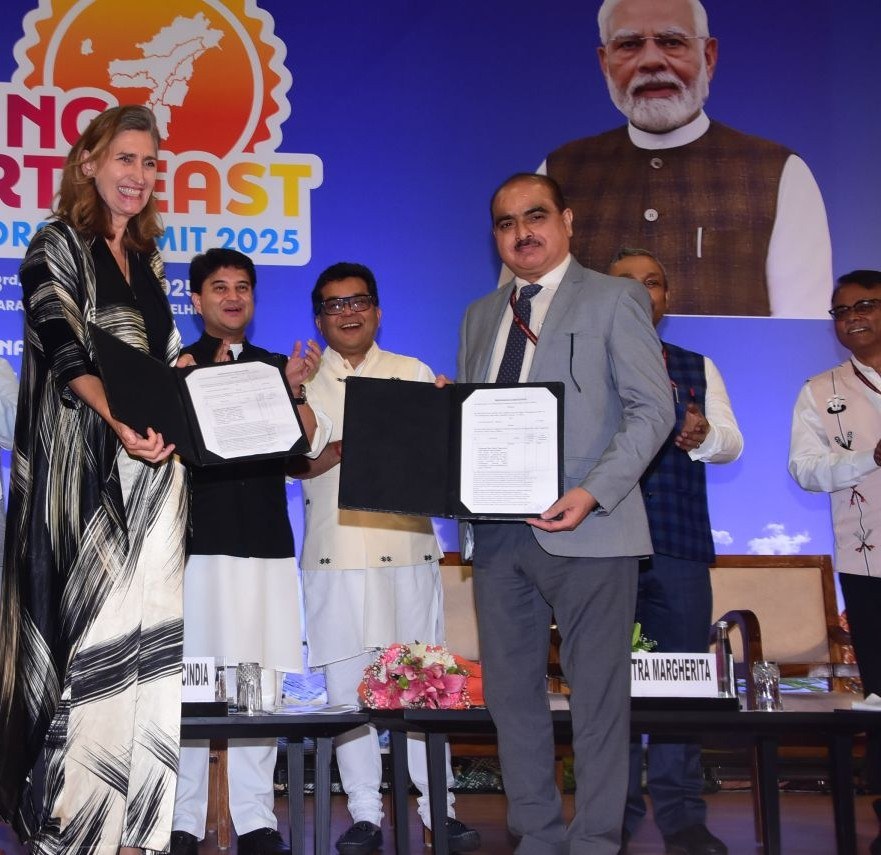
European Union · Blue Valley Cluster launch, Guwahati, Assam
In the Field, Across Regions
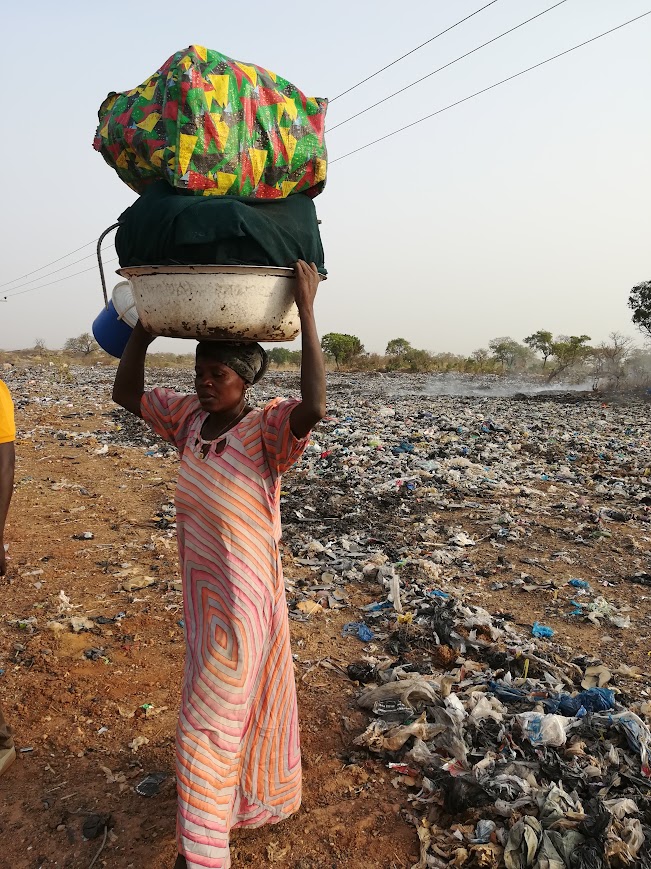 West Africa
Behaviour change and biodesigned materials
Community-based work in villages and regional capitals addressing single-use plastic, combining behaviour change with locally biodesigned alternatives. The alternatives are developed from traditional raw materials and practices, so that moving away from plastic builds on knowledge communities already hold rather than importing a substitute from outside. Women and local producers sit at the centre of both the behaviour change and the making.
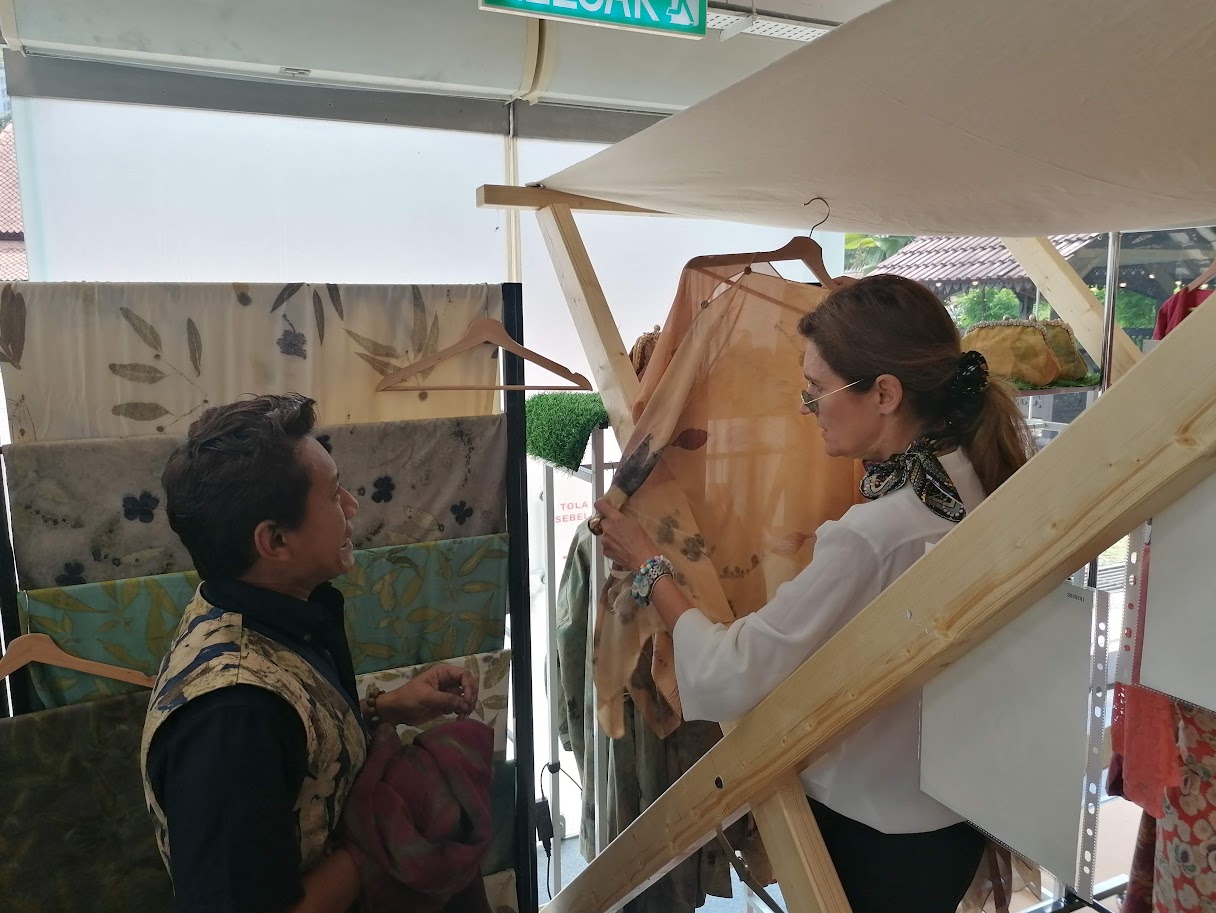 Malaysia
Circular fashion, from tradition to innovation
Work on circular fashion in Malaysia, from tradition to innovation, centred on the role of handcraft in the value chain. It connects artisans with universities in research, development and innovation, so that traditional practice and circular processes shape how materials are sourced, designed and returned to use. The supply chain itself becomes the place where heritage skill and circular design meet.
The System
The Biocultural Territory Method™, Biocultural Capital Index™, Biocultural Clusters™ and Resilience-First Micro-Clusters provide the architecture for turning biocultural wealth into lasting capability. They connect landscape, living materials, cultural identity and knowledge with research, enterprise, processing, investment and markets, while embedding rights, consent, traceability, AI and data governance, local capability and planetary health from the outset.
The Method
Biocultural Territory Method™
A seven-stage pathway for translating a territory's living and cultural wealth into durable, locally owned prosperity.
Landscape
Map ecological assets, biodiversity and regenerative potential.
Women's Knowledge
Identify, protect and value knowledge held by women, while preserving ownership and control before documentation or wider use.
Living Materials
Translate biodiversity into bio-based materials and products within ecological limits and fair benefit-sharing structures.
Cultural Identity
Anchor value in living heritage, territorial identity and narrative.
Enterprise
Strengthen women- and youth-led enterprises, cooperatives and producer organisations.
Partnership and Territorial Investment
Structure governance and finance so communities, institutions and capital work together and value remains rooted in the territory.
Planetary Health
Measure restoration, resilience and planetary contribution.
Across every stage: Rights · Consent · AI and data governance · Traceability · Local capability · Ecological limits · Fair benefit-sharing
Transferable by design · Adapted locally · Refined through the founding territories
The Index
Biocultural Capital Index™
GDP measures economic output. Biodiversity indicators measure dimensions of ecological condition. Each directs attention to a different part of a territory. The Biocultural Capital Index examines what these measures do not capture together: whether a territory can protect, govern and translate its living and cultural wealth into lasting prosperity while retaining authority and capability over the process.
What becomes measurable becomes easier for institutions to see, compare and act upon. The Index widens what can enter territorial decision-making.
The Index does not treat the presence of women, communities or Indigenous knowledge as evidence of inclusion. It examines who holds rights, who controls assets, who participates in decisions, who can enter agreements and where value ultimately settles.
Eight dimensions
Ecological Integrity
The health, diversity and regenerative capacity of the landscape.
Cultural Continuity and Territorial Identity
The vitality of living heritage, practices, crafts, languages and territorial narratives.
Women's Knowledge, Ownership and Agency
Women's authority over how their knowledge is documented, governed and used, and their position in enterprise, assets and retained value.
Rights, Consent and Governance
The legitimacy of representation, decision-making, consent, benefit-sharing and institutional accountability.
Community Resilience and Local Capability
The territory's organisational capacity, social cohesion and ability to adapt without losing control of its direction.
Youth Continuity
Whether younger generations can stay, return, participate and lead.
Economic Diversification and Retained Value
Value chains beyond extraction or monoculture, and the share of processing, ownership and margin that remains in the territory.
Planetary Health
The net effect of the territorial economy on biodiversity, climate, soil, water and human health.
The Founding Pilot Programme
The first Biocultural Capital Index assessments will take place in a small number of founding territories, for example in Brazil, the Mediterranean and Africa.
The pilots will test and refine the dimensions, indicators, evidence requirements and weightings of the Index across different ecological, cultural and institutional contexts. They will also examine what becomes visible through the Index, what existing assessment systems leave outside the frame, and whether this changes the priorities that emerge from territorial diagnosis. The work will combine territorial diagnosis, community and institutional participation, baseline development, rights and governance assessment, indicator testing and a practical development pathway.
The first territories will help establish the reference cases through which biocultural readiness is tested, refined and made practically usable.
Socio-Economic Ecosystems
Biocultural Clusters™
Biocultural Clusters connect Indigenous and traditional knowledge, territorial enterprise, research, innovation and responsible industries. Community consent, knowledge ownership, ecological limits and benefit-sharing are built into the governance structure from the beginning.
Resilience-First Micro-Clusters
A place-based cluster model for Brazil's bioeconomy moment, aligned with the Local Productive Arrangements framework and the National Bioeconomy Strategy. The model connects biodiversity, Indigenous and women's knowledge, processing capability and local enterprise, with ecosystem health and social legitimacy as hard constraints rather than externalities.
The Research
Regenerative Attention Architecture: From Visibility to Territorial Capability
Economic development begins before capital is allocated. Institutions, markets and technologies act not on a territory directly, but on what they are able to see, represent, recognise and value. What enters their decision systems, and what stays outside, shapes what receives resources and what a territory becomes capable of.
Attention → Representation & Legibility → Rights & Authority ↔ Valuation → Allocation → Capability → Territorial Consequence
Dr. Carron's research follows this conversion, from attention and legibility through rights, authority and valuation into allocation, capability and territorial transformation. The working concept of Regenerative Attention Architecture asks whether that conversion preserves and renews the ecological, cultural, social and economic capacities on which the system itself depends.
The consequences are concrete. A biological resource can become visible before rights over its use are secured. Traditional knowledge can be made legible to markets before the communities that hold it can act as counterparties. Production can be measured while soil, cultural continuity or long-term capability stay outside the decision.
This matters more as AI makes biological, ecological and traditional-knowledge data legible at unprecedented speed. It changes what can be detected, connected and brought into decisions, and with it the architecture through which value is recognised and capital is directed.
Visibility alone is not the objective. The question is whether the process leaves the source territory more capable afterwards, with stronger knowledge, ownership, institutions, ecological capacity and future choices, or simply makes extraction more precise.
What do we learn to see? Whose knowledge remains visible and authoritative? What do we value and resource? And what remains alive, capable and self-determining in the territory afterwards?
The framework
Attention-to-Capability Pathway
How what is seen moves through rights, valuation and allocation into the capabilities that are built.
Solution Reproduction Principle
Why new technologies can reproduce old harm when the definition of value, ownership, time horizon, attention and feedback remain unchanged.
Territory-in-the-Loop
How AI-assisted decisions can keep rights, origin, knowledge authority, ecological limits and territorial consequences inside the decision process.
This thinking is shared as a keynote and executive briefing.
The Initiatives
One direction, several doors
Every engagement is directed by Dr. Carron. The initiatives below provide different institutional routes through which advisory, research, education and capability-building work can be delivered. A partnership may draw on one, several or none of them.
Strategic Advisory
EcoWise
An independent strategic advisory platform working with leaders, funders and institutions on circular, regenerative and planetary-health economies, with a focus on Africa, Latin America and Asia.
Door for: advisory, corporate partnership, CSR and cross-border ecosystem development.
Education and Research
THEIA International
An independent non-profit for education, research and global citizenship, recognised by UNESCO as a German Best Practice. THEIA develops the educational and research capacity that supports the wider territorial work, including school and youth programmes, the Circular Intelligence Framework and international exchange.
Door for: research, non-profit collaboration, education and capability development.
Youth and Capability
Youth for Circular Future
A learning and mentoring initiative that develops the applied skills, practical experience and confidence young people need to enter and lead work in circular and regenerative economies.
Door for: youth capability, future job readiness and international learning partnerships.
About

Dr. h.c. Anja Carron
Dr. h.c. Anja Carron is a Principal and Strategic Advisor and ecosystem developer working across territorial and cross-border ecosystem development, socio-bioeconomy and partnership architecture. Her work sits at the intersection of territories, knowledge, institutions and capital.
An international lawyer by training, with a professional background in capital markets that includes IPOs in Hong Kong, Frankfurt and London, and a period as one of the first women to direct a German asset management company, she brings more than twenty-five years of experience across finance, education and international development to the design of institutions through which territories can build lasting prosperity from biological and cultural wealth.
Her grounding in capital markets enables her to assess territorial investment readiness, structure partnerships and engage directly with the institutions that determine how capital is allocated. Her education and development work provides the corresponding understanding of capability, institutional culture and long-term territorial change.
Her work also examines how AI is changing what becomes visible, legible and valuable at territorial level. Ecological, sequence and traditional-knowledge data increasingly feed models and products whose ownership sits elsewhere. AI also influences which forms of knowledge enter decision systems and where decisions, capital and human capability are directed.
- Global Chair, Circular Economy, G100
- Founder & President, THEIA International
- Founder, EcoWise
- Founder, Youth for Circular Future
Selected Work
The Biocultural Capital Papers
The Biocultural Capital Papers set out the thinking behind the practice: the analysis, models and governance frameworks that underpin the Method, the Index and the Clusters.
Across all of them runs a single premise: a territory's wealth is measured by what it regenerates, transmits and keeps under its own authority, not by output alone.
From the Margins Inward
Inclusive growth and planetary health: why the future economy will be built from the margins inward. A comparative analysis across Assam, Brazil, Morocco, Ghana, the Philippines, Indonesia and Galicia.
Download the paperLearning at the Source
A future-ready learning and skills ecosystem for biocultural regions, designed in stewardship by women and communities.
Request the paperBuilding from the Living System
A biocultural model for territorial economies in North and West Africa, examining how traditional practice, living materials and community knowledge can become the foundation of resilient local industries.
Request the paperThe Biocultural Space and AI as Guardian of Nature and People
A concept note on organising a biocultural space in which nature becomes a primary reference for law, provision, technology and infrastructure.
Request the paperAdditional papers and working notes are shared on request.
Platforms and Networks
Connected across the Mediterranean
Biocultural Ecosystems takes part in European and Euro-Mediterranean platforms connecting research, policy, clusters and the sustainable blue and green economy. Participation is as a registered stakeholder or member. It is not a claim of institutional endorsement.
Mediterranean Blue Economy Stakeholder Platform
The regional platform for sharing knowledge on marine and maritime affairs and the sustainable blue economy across the Mediterranean basin. Registered stakeholder.
Euro-Mediterranean Hub for Research and Innovation
A learning and collaborative platform supporting the UfM Regional Policy Dialogue on Research and Innovation, and the R&I roadmaps on Health, Renewable Energies and Climate Change. Registered member.
MED-Hubs Community
A Mediterranean network driving blue innovation, connecting ecosystem builders and key actors across the maritime and blue economy sector. Registered member.
European Cluster Collaboration Platform
Partner in the Green Transition network. The network consists of highly experienced actors with the common interest to promote knowledge on resource efficiency and help businesses improve their environmental performance. The Green Transition Support network aims to stimulate exchange between resource efficiency support providers and lead businesses towards the services they need.




Contact
Four doors
Governments and Funders
Territorial strategies, readiness assessments and the Founding Pilot Programme.
Pilot Territories
Host one of the first Biocultural Capital Index assessments and help shape the instrument.
Industry and Cluster Partners
Develop responsible, traceable and locally rooted biocultural value chains, territorial clusters and cross-border partnerships.
Speaking and Media
Keynotes and expert contributions on territorial bioeconomy, biocultural capital, attention architecture, planetary health, AI and human capability.
Enquiries: contact@anjacarron.global
Impressum
Angaben gemäß § 5 DDG.
Dr. h.c. Anja Carron, trading as Biocultural Capital Advisory.
Sachsenring 43, 50677 Cologne, Germany.
Email: contact@anjacarron.global
Responsible for content under § 18 Abs. 2 MStV: Anja Carron.